




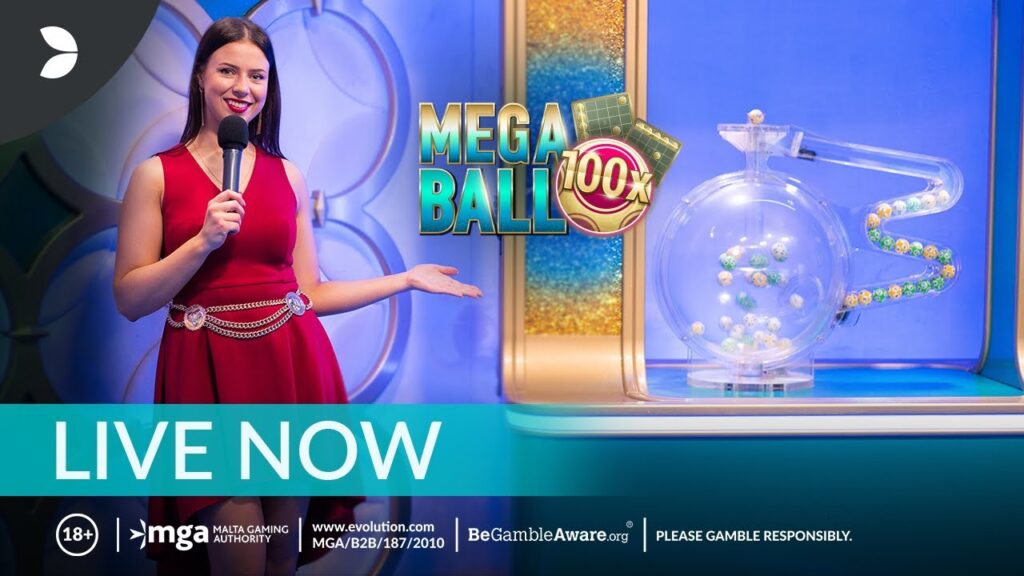
Mega Ball combines bingo-style number matching with a multiplier feature. The useful questions are how a card qualifies for a prize, when a multiplier applies and how much a round costs—not whether new technology can predict a result.
This BouncingBall8 guide focuses on those concepts. Exact card limits, prices, multiplier ranges and payout schedules should be checked in the rules displayed with the game. For related formats, explore our casino and live-game guide.
What is Mega Ball?
Evolution describes its Mega Ball as a bingo-style live game show. Participants have numbered cards, drawn numbers are marked on those cards, and qualifying completed lines determine prizes under the paytable. A special Mega Ball feature can multiply an eligible prize when its conditions are met.
This is a general introduction to that format, not confirmation that every platform offers the same product or settings. Check the provider name and the current rules rather than relying only on a game thumbnail.
How cards and number draws work
- Check the card cost. Read both the price per card and the number of cards included in the round.
- Understand a qualifying pattern. The rules explain which completed lines or combinations count and how their prizes are calculated.
- Follow the draw. Compare the marked numbers and completed lines with the game’s result display.
- Read the final settlement. A card close to completing a line is different from a card that qualifies for a prize.
More cards also mean more spending. For a hypothetical price of 2 units per card, 10 cards cost 20 units per round. That cost repeats if the same purchase is made in another round; it is not a one-time session fee.
When does a multiplier apply?
A multiplier is conditional. In Evolution’s description, the Mega Ball must complete a qualifying line for the multiplier feature to affect the relevant card payout. Its appearance alone does not multiply every card or guarantee a prize.
Read how the displayed paytable treats eligible lines, multiple qualifying results and maximum payouts. Do not assume that a large multiplier shown on screen describes the amount you receive.
A simple illustrative payout calculation
Suppose a game’s applicable rules specify an eligible prize of 20 units and say a 5× multiplier applies to that prize. The arithmetic is 20 × 5 = 100 units, before any applicable cap or other adjustment.
These are hypothetical values, not a quoted Mega Ball payout. The example assumes the rules multiply that prize amount; use the actual paytable to establish what is being multiplied.
Also distinguish a prize from the net result. If a hypothetical round costs 30 units and its total credited return is 100 units, the net result is 70 units. A smaller credited return could still leave a loss after card costs.
What previous results can and cannot tell you
A history panel records completed rounds; it is not proof that a particular outcome is due next. A losing run does not create an obligation for the next round to repay earlier spending.
Within a draw that removes balls, the numbers already drawn affect which balls remain. That is different from predicting a future round using “hot” numbers, recent multipliers or a personal lucky pattern. No prediction system is offered in this guide.
Check these details in the current game rules
- Provider and full game name.
- Card price, number of cards and total round cost.
- Qualifying lines and the payout basis.
- Multiplier eligibility and any cap.
- How final results, interrupted rounds and disputes are handled.
If an important term is unclear, seek clarification rather than assuming an old review is still correct. A limit on spending does not eliminate gambling harm, and buying extra cards to recover a loss increases exposure. Read the BouncingBall8 responsible-gaming information for further guidance.
Sources and review date
- Evolution: Mega Ball game overview — the reference for the general format and multiplier conditions.
- Responsible Gambling Council: common gambling myths — misconceptions about being due a win and the limits of budgeting.
Reviewed and updated: 6 November 2026. Numerical examples are illustrative; consult the game’s current rules for actual terms.